

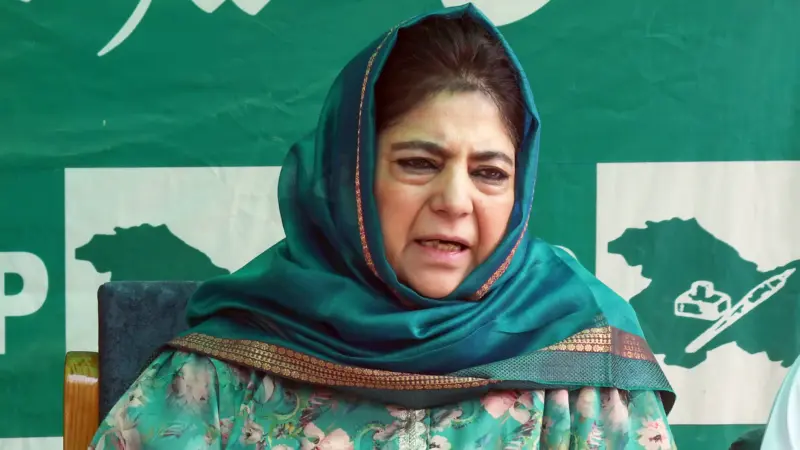
Srinagar: Former Jammu and Kashmir chief minister and president of the People’s Democratic Party (PDP), Mehbooba Mufti, is facing intense criticism for her recent comments “banta hai” in Kashmir—remarks she made while drawing a comparison with the recent CJP-led protests at New Delhi’s Jantar Mantar.
As one critic sharply noted, “Her statements have reopened old wounds in the Valley and reignited debate over one of the most painful chapters of recent Kashmiri history.”
A remark by former Jammu and Kashmir Chief Minister Mehbooba Mufti that the use of force in Kashmir was “understandable” because of militancy, while condemning the alleged police action at Delhi’s Jantar Mantar, has triggered a political row and revived memories of the Valley’s pellet gun victims.
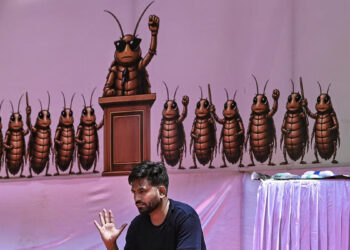
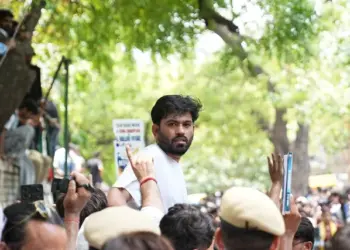
Speaking at the Cockroach Janta Party protest at Jantar Mantar in New Delhi on Thursday, the Peoples Democratic Party (PDP) president said, “We have seen this spectacle first time (in Delhi). We have seen it in Kashmir, from last many years. Magar wahan militancy hain, us ka ek banta hain (But there is militancy there, so it is understandable). You have militants on one side and security forces on the other. There are no militants here.”
The “banta hai” remark drew immediate criticism, with opponents accusing Mehbooba of justifying the use of force against Kashmiri protesters and portraying them as militants.
The controversy quickly spilled onto social media, with ruling National Conference (NC) leaders and supporters circulating video clips juxtaposing Mehbooba’s latest remarks with her statements during the 2016 unrest, including her controversial “milk and toffee” quote to accuse the former chief minister of blatant hypocrisy.
Reacting sharply to the statement, the National Conference (NC) posted on its official X handle: “If you happen to be a Kashmiri who is protesting for his/her rights, ‘aap pe force use karna to banta hai’ (it is justified to use force against you). Wow.”
NC spokesperson Imran Nabi Dar accused the PDP chief of unabashedly defending the use of brutal force against local youth and children.
“I am appalled beyond words. @MehboobaMufti unabashedly and casually brands every Kashmiri protester a ‘militant’. The kids, the little girls… just everyone was a militant, she says,” Dar posted on X.
“Even shame must be ashamed today. Her hypocrisy is uglier than what I believed.”
Demand for an apology came from NC leader and Zadibal MLA Tanvir Sadiq, who questioned whether everyday civil demonstrations were now being labelled as armed resistance.
“Are those who protest against reservation militants? Are those who protest for basic amenities also militants? This is shameful coming from a former chief minister of Jammu and Kashmir,” Sadiq said, adding that Mehbooba owes an immediate apology to the people of J-K.
Apni Party president Altaf Bukhari said he was “neither shocked nor surprised” by the PDP chief’s remarks, citing her controversial record during her tenure as chief minister during the 2016 summer unrest in the Valley.
“This is, after all, the same leader who justified the killing of Kashmiri children by asking, ‘Kya woh doodh aur toffee lane gaye the?’ (Had those children gone out to fetch milk and toffees?),” Bukhari said.
He added that the region has not forgotten the human toll of her administration’s policies.
“It was under her government that pellet guns were used against protesting children. Hundreds of young boys and girls lost their eyesight or suffered permanent injuries because of those pellets. These are painful memories that no amount of political rhetoric can erase,” he said.
During the 2016 unrest, more than 15,000 civilians were injured, while hundreds suffered severe eye injuries, many of them losing vision in one or both eyes.
Many survivors continue to live with permanent blindness, facial disfigurement and psychological trauma years after the violence subsided.
Human rights organisations, including Amnesty International, repeatedly called for a ban on pellet shotguns, arguing that the weapon is inherently indiscriminate because each cartridge disperses hundreds of metal pellets, making precise targeting impossible.
Security agencies, however, have consistently maintained that pellet guns were introduced to minimise fatalities during violent protests and were used only after other crowd-control measures had failed.
Although street protests and stone-pelting have declined sharply in Kashmir in recent years, the legacy of pellet victims continues to shape public memory.