


Tehran/Washington: The United States and Iran have reached an agreement to end the war and open the Strait of Hormuz, offering relief to the global economy more than three months since fighting began.
The agreement, brokered by Pakistan after months of indirect negotiations, is scheduled to be formally signed in Switzerland on Friday, according to officials from both countries.
The Strait of Hormuz, through which roughly one-fifth of the world’s oil supply passes, is expected to reopen following the signing ceremony, easing fears of a prolonged disruption to global energy markets.
Trump Hails “Great Deal”
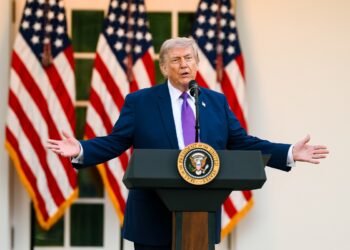
U.S. President Donald Trump announced the breakthrough on Truth Social, declaring that the agreement would restore maritime traffic and end the blockade imposed during the conflict.
“The Deal with the Islamic Republic of Iran is now complete. Congratulations to all,” Trump wrote.
In a subsequent post, Trump said he was authorising the removal of the naval blockade and the reopening of the strategic waterway.
“I hereby fully authorise the toll-free opening of the Strait of Hormuz and, simultaneously, authorise the immediate removal of the United States Naval blockade. Ships of the World, start your engines. Let the oil flow!”
Trump later clarified that the Strait would formally reopen following the signing ceremony on Friday.
Describing the accord as a historic achievement, Trump said, “This Great Deal will bring Peace and Security to the whole Region. Many presidents have tried to make Peace with Iran, and all have failed before me.”
“The Leaders of the Region have, for the first time, found a President who can help them achieve real Peace.”
The agreement caps a turbulent period marked by U.S. military strikes against Iranian targets, Iranian retaliation across the region, and repeated threats by Trump to intensify military action before ultimately embracing diplomacy.
Iran Confirms End of War
Iran’s Supreme National Security Council (SNSC) confirmed that the text of the memorandum had been finalized after what it described as difficult and intensive negotiations.
In a statement released Monday night, the council said:
“Based on the approval of the Supreme National Security Council, the text of the memorandum of understanding regarding the end-of-war negotiations (Islamabad talks) between Iran and the United States was finalized on the evening of June 15.”
The statement said the agreement provides for “The immediate and permanent end of the war and military operations on all fronts, including Lebanon”.
It also confirmed: “The naval blockade against Iran is terminated immediately and completely.”
Iran credited the outcome to what it described as the leadership of the late Ayatollah Seyyed Ali Khamenei, the guidance of current leader Ayatollah Seyyed Mojtaba Khamenei, the support of the Iranian people and the efforts of the armed forces.
Deputy Foreign Minister Kazem Gharibabadi separately confirmed that the memorandum would be signed in Switzerland on Friday.
“Starting tonight, the U.S. naval blockade against Iran will be terminated,” he said.
Military Declares Victory
Iran’s military leadership portrayed the agreement as a strategic victory over Washington and Israel.
The Khatam al-Anbiya Central Headquarters, the country’s top military command centre, said the conflict had demonstrated the failure of U.S. and Israeli objectives.
“The Iranian people and their fighters have proven that the wretched American and Zionist enemies have no choice but to accept defeat and surrender,” the headquarters said in a statement.
It added that the “divine and steel-like will” of the Iranian nation had become an “unbreakable barrier” against future aggression.
Senior commanders also warned that Iran remained ready for renewed conflict if attacked again.
Major General Ali Abdollahi, commander of the Khatam al-Anbiya Central Headquarters, said Iran’s armed forces still had their: “Finger on the trigger”.
and warned that any miscalculation would be met with a strike “at the heart of the enemy”.
Lebanon Strike Threatens Fragile Calm
The diplomatic breakthrough came amid renewed regional tensions after Israel carried out fresh airstrikes on Beirut’s southern suburbs, an area considered a Hezbollah stronghold.
The attack triggered strong reactions in Tehran, where officials warned that Lebanon remained a central component of any broader regional settlement.
Mohammad Baqer Zolqadr, secretary of Iran’s Supreme National Security Council, said an Iranian response was “imminent” and warned that attacks on Lebanon crossed Iranian red lines.
“Lebanon and its resistance are the very life of Iran,” he said.
Parliament Speaker Mohammad Baqer Qalibaf said the strike demonstrated that Israel continued to undermine diplomatic efforts.
“The enemy will never be able to single out any part of the resistance,” he said.
Qalibaf added that Israel’s attack on Beirut showed the Trump administration either lacked the will or the ability to enforce commitments made during negotiations.
Nuclear Talks Deferred
Under the agreement, the most contentious issues surrounding Iran’s nuclear programme remain unresolved for now.
Officials said the memorandum establishes a 60-day negotiation period during which the two sides will seek a broader settlement covering uranium enrichment, nuclear monitoring and the disposition of Iran’s highly enriched uranium stockpiles.
Iran has maintained that future negotiations must protect its sovereign rights while focusing on sanctions relief and economic recovery.
Foreign Minister Abbas Araghchi reiterated that any future regional security arrangement that excludes Iran would be unsustainable.
“Any new security arrangement in West Asia that disregards the Islamic Republic is bound to fail,” he said.
Pakistan and Qatar Credited
Pakistani Prime Minister Shehbaz Sharif, whose government played a central mediating role alongside Qatar, announced earlier that a peace agreement had been reached after intensive negotiations.
“Peace has never been this close as it is now,” Sharif said.
The SNSC statement formally thanked both Pakistan and Qatar for their mediation efforts.
The agreement traces its origins to a ceasefire brokered on April 8, which was repeatedly extended while negotiations continued.
Markets Watch Hormuz Reopening
The reopening of the Strait of Hormuz is expected to be one of the most immediate consequences of the deal.
The narrow waterway that connects the Persian Gulf to global markets and serves as the transit route for nearly 20% of global oil shipments was open before war began on February 28.
The US-Israeli war on Iran had severely disrupted maritime traffic and raised concerns over energy supplies, contributing to volatility in global oil markets.
If successfully implemented, the agreement could restore normal shipping flows and reduce one of the most significant geopolitical risks facing global energy markets.
Still, questions remain over whether the broader agreement can survive continuing tensions involving Israel, Hezbollah and Iran’s regional allies, as well as the difficult nuclear negotiations scheduled to begin in the coming weeks.(PTI)