

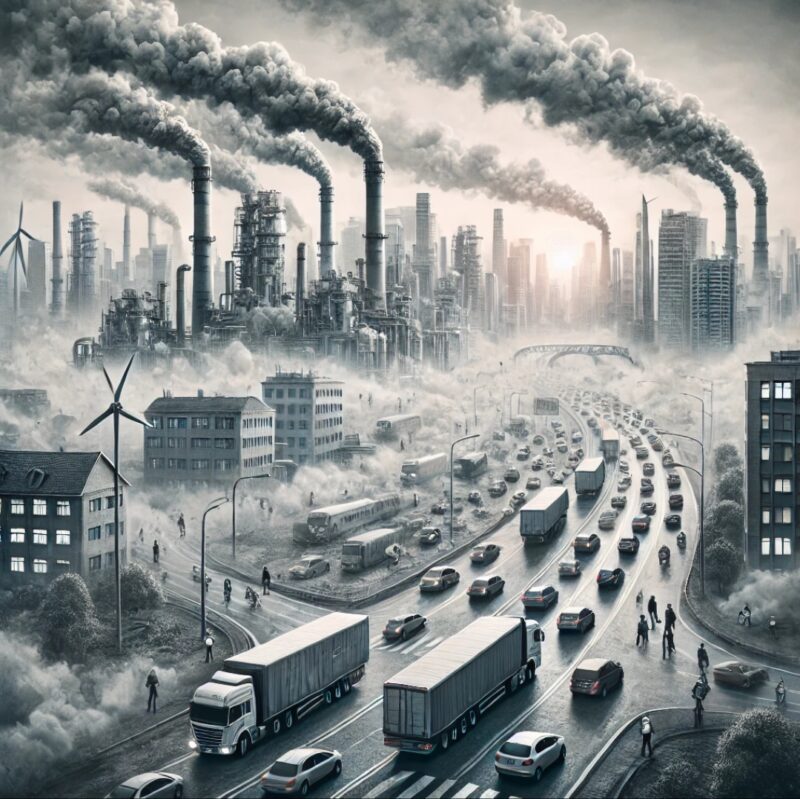
The global air pollution crisis has reached alarming levels, with numerous countries experiencing significant air quality deterioration. In 2024, the World Health Organization (WHO) guidelines and AQI (Air Quality Index) provide a clear picture of the environmental health risks faced by various nations.
According to IQAir’s 2024 World Air Quality Report, Chad topped the rankings for the most polluted country overall, followed by Bangladesh, Pakistan, Democratic Republic of Congo and then India in fifth place.
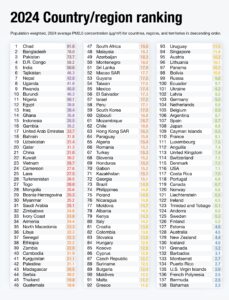
Only seven countries met World Health Organization (WHO) air quality standards last year, data showed on Tuesday, as researchers warned that the war on smog would only get harder after the United States shut down its global monitoring efforts.
Only Australia, New Zealand, the Bahamas, Barbados, Grenada, Estonia and Iceland made the grade, IQAir said.
India, fifth in the smog rankings behind Chad, Bangladesh, Pakistan and the Democratic Republic of Congo, saw average PM2.5 fall 7% on the year to 50.6 mg/cu m.
But it accounted for 12 of the top 20 most polluted cities, with Byrnihat, in a heavily industrialised part of the country’s northeast, in first place, registering an average PM2.5 level of 128 mg/cu m.
Climate change is playing an increasing role in driving up pollution, Chester-Schroeder warned, with higher temperatures causing fiercer and lengthier forest fires that swept through parts of South East Asia and South America.
Pollution in India is more than 10 times higher than the WHO’s annual guideline. Thirteen of the world’s top 20 most polluted cities are in India, with Byrnihat in Assam topping the list, according to World Air Quality Report 2024 by Swiss air quality technology company IQAir.
India ranks the third in most polluted countries in south and central Asia.
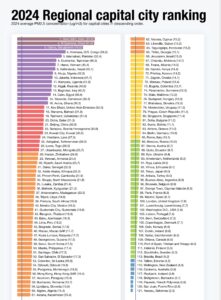
Delhi remains the most polluted capital city globally, while India ranked as the world’s fifth most polluted country in 2024, down from third in 2023. Byrnihat, India was the most polluted metropolitan area of 2024. The region of Central and South Asia was home to the top seven most polluted cities in the world. While India was home to six of the nine most polluted global cities.
Four cities in neighbouring countries like Pakistan and one in China are among the world’s top 20 polluted cities. The report said India saw a 7% decline in PM2.5 concentrations in 2024, averaging 50.6 micrograms per cubic metre, compared to 54.4 micrograms per cubic metre in 2023.
The Indian cities in the world’s top 20 most polluted cities are Byrnihat, Delhi, Punjab’s Mullanpur, Faridabad, Loni, Gurugram, Ganganagar, Greater Noida, Bhiwadi, Muzaffarnagar, Hanumangarh and Noida.
Overall, 35% of the Indian cities reported annual PM2.5 levels exceeding 10 times the WHO limit of 5 micrograms per cubic metre, the report said. The high level of pollution in Byrnihat, a town on the border of Assam and Meghalaya, is due to emissions from local factories, including distilleries, iron and steel plants.
Delhi grapples with high air pollution year-round and the problem worsens in winter when unfavourable meteorological conditions, combined with vehicular emissions, paddy-straw burning, firecrackers and other local pollution sources, make the air quality hazardous.
According to the International Energy Agency, road transport accounts for 12 per cent of India’s energy-related CO2 emissions and is a major contributor to urban pollution. As demand for private transportation and goods movement grows, energy use and CO2 emissions from road transport could double by 2050.