


Caracas (Venezuela): The United States carried out a lightning military strike on Venezuela early Saturday, capturing President Nicolas Maduro and his wife, Cilia Flores, and spiriting them out of the country. American officials say the pair will face narco-terrorism charges in US courts.
The overnight operation left Venezuela reeling, with its leadership uncertain and details of casualties and the impact on its military still to emerge. Countries across the region and the wider world were absorbing the destabilising implications of the apparently unilateral US action.
Explosions rang out, and low-flying aircraft swept through Venezuela’s capital, Caracas, early Saturday. At least seven blasts were heard in an attack that lasted less than 30 minutes. The targets appeared to include military infrastructure. Smoke was seen rising from the hangar of a military base in Caracas, and another military installation in the capital was without power.
Venezuelan officials said people had been killed, but the scale of casualties was unclear.
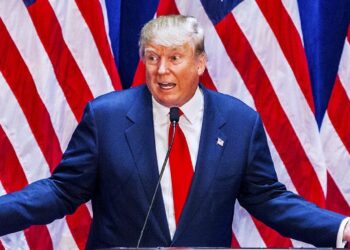
Trump said that the United States had captured the Venezuelan president, Nicolás Maduro, and was taking him to New York to face criminal charges, the stunning culmination of a monthslong campaign by his administration to oust the authoritarian leader. The United States would “run” the country until a proper transition of power could be arranged, the president said hours later, raising the prospect of an open-ended commitment.
The attack followed months of escalating pressure by the Trump administration, which has built up naval forces in the waters off South America and, since early September, has carried out deadly strikes on alleged drug-smuggling boats in the eastern Pacific and Caribbean. Last week, the US struck Venezuelan soil with a CIA drone strike at a docking area alleged to have been used by drug cartels.
Venezuelan ruling party leader Nahum Fernández told The Associated Press that Maduro and Flores were at their home within the Ft. Tiuna military installation when they were captured.
“That’s where they bombed,” he said. “And, there, they carried out what we could call a kidnapping of the president and the first lady of the country.”
The attack itself lasted less than 30 minutes and the explosions — at least seven blasts — sent people rushing into the streets, while others took to social media to report what they’d seen and heard. Some Venezuelan civilians and members of the military were killed, said Rodríguez, the vice president, without giving a number.
Venezuela’s government responded to the attack with a call to action: “People to the streets!”
Armed people and uniformed members of a civilian militia headed into the streets of a Caracas neighborhood long considered a stronghold of the ruling party.
The episode drew immediate comparisons to the 1990 U.S. invasion of Panama, which resulted in the capture of leader Manuel Antonio Noriega and his transfer to the United States to face drug trafficking charges. That operation, while widely criticized, stopped short of Washington declaring it would govern Panama.