

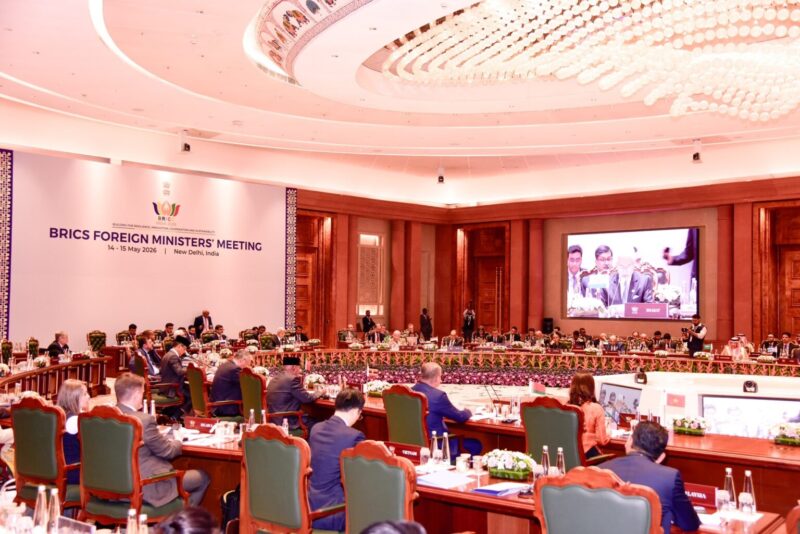
New Delhi: Iran and the United Arab Emirates exchanged sharp accusations at a BRICS foreign ministers’ meeting in New Delhi on Thursday, exposing tensions within the bloc over the Gulf states’ alleged involvement in the ongoing war with Tehran.
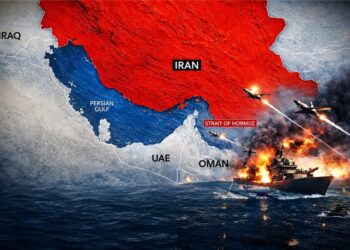
Iranian Foreign Minister Abbas Araqchi accused the UAE of being directly involved in military operations against Iran and of failing to condemn US and Israeli strikes that began on February 28.
“I didn’t name the UAE in my statement for the sake of unity,” Araqchi was quoted by Iranian state media as saying. “But the truth is that the UAE was directly involved in the aggression against my country.”
Araqchi said the UAE should reconsider its regional policies, arguing that reliance on U.S. military bases and ties with Israel had not brought security. He added that Iran and the UAE must “live side by side in peace.”
The dispute came a day after the UAE publicly denied Israeli Prime Minister Benjamin Netanyahu’s claim that he had made a secret visit to the Gulf country during the war.
The UAE did not immediately respond to Araqchi’s remarks, and Iranian media did not specify what comments by the Emirati delegation prompted his response.
The exchange underscores growing strains within BRICS, which expanded in 2024 to include both Iran and the UAE despite their competing regional interests.
Reports this week have suggested that Gulf states have taken a more active role in the conflict. The Wall Street Journal reported that the UAE carried out military strikes against Iran in early April, while Western and Iranian officials have said Saudi Arabia also launched covert retaliatory attacks.
Iranian media said disagreements between Tehran and Abu Dhabi could complicate efforts to issue a joint communiqué at the conclusion of the BRICS meeting.
The public clash highlights how the war with Iran is testing the cohesion of BRICS, a grouping that seeks to present itself as a platform for cooperation among major emerging powers.
BRICS, originally comprising Brazil, Russia, India, China and South Africa, expanded in 2024 to include Egypt, Ethiopia, Iran and the UAE, with Indonesia joining in 2025.
The India-hosted meet assumes greater significance as the influential bloc grapples with the economic consequences of the West Asia crisis, particularly severe energy-supply disruptions, and Washington’s policy on trade and tariffs.