

JERUSALEM: Iranian armed forces launched a barrage of ballistic missiles at Israel on Sunday in retaliation for Israeli airstrikes on Beirut, marking Tehran’s first direct attack on Israel since a fragile ceasefire took effect in April and raising fears of a return to full-scale war.
Air raid sirens sounded across large parts of Israel, including the occupied Golan Heights, Tiberias, Safed, Nazareth, Haifa and several other cities, according to Israeli media. Millions of residents were ordered into shelters as air defence systems were activated.
Tehran had warned of retaliation after Israel struck Beirut’s southern suburbs earlier on Sunday, despite U.S. efforts in recent days to prevent further escalation in Lebanon.
In a statement, Iran’s Revolutionary Guards said the missile attack was a response to repeated Israeli violations of ceasefire arrangements and recent attacks on Lebanon.
“Should these acts of aggression be repeated, the responses will be broader in scope and will encompass all American and Zionist targets throughout the region,” the statement said.
Iran’s Khatam al-Anbiya Central Headquarters, the country’s top military command, accused Israel of systematically violating ceasefire agreements and escalating attacks on Lebanon with direct American backing and international silence.
The command said the “child-killing Zionist regime” had crossed all red lines by expanding its military operations from southern Lebanon into Beirut’s southern suburb of Dahiyeh.
“We had previously warned that if crimes expand in Beirut’s Dahiyeh, we will strike targets within the occupied territories,” the statement said.
Meanwhile loud explosions were heard in Tehran and other cities early Monday, according to Iranian media.
“Several explosions heard in Tehran, Tabriz and Isfahan,” state TV posted on Telegram.
Shortly after Israel said it had struck targets in Iran.
“A short while ago, the Israeli Air Force struck military targets belonging to the Iranian regime in western and central Iran,” the Israel Defense Forces posted on Telegram.
“Iran has made a grave mistake,” Israel military spokesperson Brig. Gen. Effie Defrin said. The military’s chief of staff, Lt. Gen. Eyal Zamir, said it will “strike the enemy with determination as soon as the order is given.”
Iran had warned that an attack on Beirut would renew full-scale war across the Mideast, even as Pakistan and other mediators try to restart talks between Tehran and Washington.
“US forces across the Middle East remain vigilant and ready,” the US Central Command posted on X shortly before the missile launches.
Trump urged Israel not to strike Iran
Trump told news outlet Axios he would press Netanyahu not to retaliate.
“Israel had its strike and Iran had its strike. We don’t need another one,” Trump said. “We are very close to a final deal with Iran. It is going to be a good deal. I don’t want it to blow up because of what is happening now.”
Israel would retaliate, said an Israeli source, speaking to Reuters on the condition of anonymity following the Iranian attack.
Shortly after midnight local time, the Israeli military issued a brief statement, citing Zamir as saying his forces had not been directed to attack Iran so far, but would do so “with determination” once given the order.
Regional tensions mount
The latest exchange came after Israel carried out airstrikes on a residential building in Beirut’s southern suburbs, killing two people and wounding 20 others, according to Lebanon’s health ministry.
The attack took place days after Israeli and Lebanese officials reached a ceasefire understanding during talks hosted by the United States, although Hezbollah rejected the arrangement.
Hezbollah opposes direct negotiations between Lebanon and Israel and supports Iran’s position that any broader ceasefire agreement must include an end to fighting in Lebanon.
Iran has repeatedly warned that attacks on Beirut could trigger a wider regional conflict, even as mediators including Pakistan continue efforts to revive talks between Tehran and Washington.
Shortly before the missile launches, U.S. Central Command said American forces remained on high alert.
“U.S. forces across the Middle East remain vigilant and ready,” CENTCOM said in a post on X.
The U.S. Embassy in Israel later instructed its staff and family members to shelter in place.
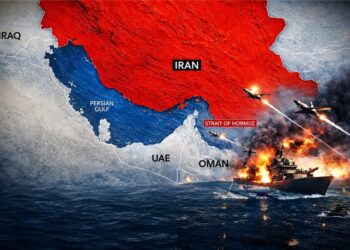
The conflict continues to affect vital shipping routes and energy markets. Iran maintains tight control over the Strait of Hormuz while the United States continues restrictions on Iranian ports, disrupting shipments of oil, natural gas and fertiliser.
Following Sunday’s missile launches, Iraq’s Civil Aviation Authority announced the closure of its airspace for 72 hours, while Syria suspended civilian flights for 12 hours.
Iran also halted all flights from Tehran’s main international airport, according to the Mizan news agency.
The latest developments have raised concerns that months of diplomacy and ceasefire efforts could unravel, pushing the region closer to a broader conflict involving Iran, Israel, Hezbollah and the United States.