

Washington: The US strikes on Iran’s nuclear facilities did not destroy the country’s nuclear programme and probably only set it back by months, according to an early Pentagon intelligence assessment of the attack.
The Islamic Republic’s stockpile of enriched uranium was not eliminated in Saturday’s bombings, sources familiar with the Defense Intelligence Agency evaluation told the BBC’s US partner CBS.
The White House said the “flat-out wrong” assessment was leaked by “a low-level loser in the intelligence community”.
President Donald Trump again declared the nuclear sites in Iran “completely destroyed” and accused media of “an attempt to demean one of the most successful military strikes in history”.
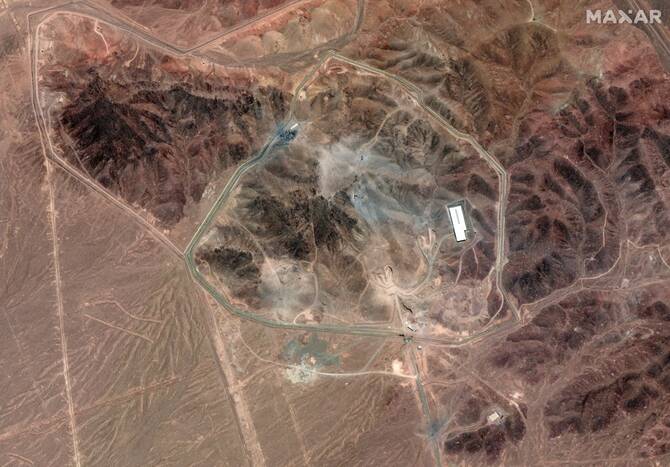
The US struck three nuclear facilities in Iran – Fordo, Natanz and Isfahan – with “bunker buster” bombs capable of penetrating 18m (60ft) of concrete or 61m (200ft) of earth before exploding.
But sources familiar with the Pentagon’s intelligence assessment say Iran’s centrifuges are largely “intact” and the impact was limited to aboveground structures.
Entrances to two nuclear facilities were sealed off, and some infrastructure was destroyed or damaged, but much of the facilities, which are deep underground, escaped the brunt of the blasts.
The anonymous sources told US media it is estimated the attack only set Iran back “a few months, tops”, and that any resumption of its nuclear programme may be based on how long it takes the country to dig out and make repairs.
Sources also confirmed to CBS that some of Iran’s enriched uranium stockpile was moved before the strikes, according to the intelligence assessment.
The US 30,000lb (14,000kg) Massive Ordnance Penetrator bomb was thought to be the only weapon capable of destroying Iran’s underground enrichment facilities.
Iran’s government said Tuesday it had “taken the necessary measures” to ensure the continuation of its nuclear programme after US and Israeli strikes targeted its facilities.
“We have taken the necessary measures and are taking stock of the damage” caused by the strikes, said the head of the Atomic Energy Organization of Iran, Mohammad Eslami, in a statement aired on state television.
An adviser to Iran’s supreme leader, Ayatollah Ali Khamenei, said his country still had stocks of enriched uranium and that “the game is not over”.